
To start a wedding venue, check zoning and permits before you spend on anything else. Many people build first and find out about permits, occupancy or septic limits later. The steps below put things in the order that avoids that. Setup costs and a year's profit follow.
How to start a wedding venue in nine steps
- Check zoning and permits before anything else. Call the county planning office with the address and ask whether events are allowed and what permit they need. Rural land often needs a conditional or special use permit, with a public hearing, limits on guest numbers and hours, and conditions on parking, noise and septic. That answer decides whether the rest is worth doing, so get it in writing first.
- Find out how many guests the site can legally hold. The fire marshal sets the occupancy of each building, and the septic system, well, parking and road access can cap you lower. Your headcount is the smallest of those numbers. The free venue capacity calculator gives a first estimate from the floor area, and the free floor plan maker shows whether the tables really fit; the official number comes from the inspection.
- Choose what you sell. A rental-only venue (couples bring caterers and a bar) is the lightest to run. In-house catering or a bar takes more staff and licenses and earns more per event. An all-inclusive package is simplest for couples and the most work for you. Pick one before you design the kitchen, because each needs a different one. How wedding venues price covers the five pricing models.
- Write the plan and run the numbers. Sellable dates, your fee for each, the share you expect to book, what each event costs to host and your fixed costs. If the plan only works when every Saturday sells, it doesn't work. The wedding venue business plan has the sections a lender expects and a revenue model that does the math.
- Build for the day. Restrooms for your headcount, step-free routes, a getting-ready room, a ceremony site with a rain plan, power for bands and caterers, lighting for the walk to the cars, parking, and somewhere for vendors to load in. Couples see the view; guests remember the line for the restroom.
- Insurance, contracts and the deposit. General liability, liquor liability if alcohol is served on site, and property cover. Then a rental agreement that sets the deposit, payment schedule, final count deadline, cancellation terms and vendor rules. The free venue rental agreement template fills one in from your terms, and venue rental agreement clauses explains the twelve to include; have a local attorney review yours.
- Set prices and book the first season. Price by day and season, publish at least a starting price, and hold dates only with a signed contract and a deposit. A styled shoot before opening gives you photos of your own space for the website and listings, and a few booked dates make the next tours easier.
- Get found and run tours well. A Google Business Profile, a website that shows prices, capacity and photos, and the listings couples in your area use. Answer inquiries within a day, with a written quote: the free event proposal template lays one out. On the tour, answer the questions couples ask before they ask them; wedding venue tour questions has them in the order they come up.
- Plan how you will run the day. A run of show your crew follows (the free run of show template builds one), a BEO for the kitchen and bar, a floor plan for setup, and a vendor list with arrival times. Decide who is in charge on the day before the first wedding, not during it.
How much does it cost to build a wedding venue?
There is no honest single number: a barn on land you own and a new building on bought land are different businesses. Get quotes for each of these lines and put them in the business plan:
- Property: the purchase or lease, and any land work.
- Permits and studies: the use permit, building permits, septic and traffic studies if the county asks.
- The building: renovation, restrooms, accessibility, a catering prep kitchen, heating and cooling.
- The site: parking, paths and lighting, a ceremony site, drainage.
- Furniture and equipment: tables, chairs, linens, a dance floor, a sound system. Banquet table sizes and the tablecloth size calculator help count them.
- Opening costs: insurance, a website and photos, listings, software, and cash to carry you through the first slow season.
The permit costs and the septic or parking upgrades are the lines that surprise people, so get those quotes before the renovation ones.
Starting a wedding venue with little money
Don't build. Lease a building that already has restrooms, parking and an occupancy rating, or convert one you already own, and spend on the lines guests notice: restrooms, lighting and a rain plan. A lease, ideally with an option to buy, lets you test whether the dates sell before you carry a mortgage. Rental-only, where couples bring their own caterer and bar, keeps the kitchen and license costs off the first year.
Is a wedding venue profitable?
It can be, and the answer turns almost entirely on how many Saturdays you sell. Our wedding venue business plan runs a made-up 120-guest venue through a year. The arithmetic is the same for any venue:
Example venue, one year: 41 events booked
- Revenue $284,000
- Cost to run the events$2,300 each -$94,300
- Card and payment fees3% -$8,520
- Fixed costsmortgage or lease, insurance, property tax, maintenance and grounds, marketing and listings, software and other -$96,000
- Profit before the owner is paid30% of revenue $85,180
Now drop peak-Saturday bookings from 80 percent to 60 and the same venue keeps $55,455. The fixed costs don't move when the calendar is thin, which is why a lender asks for a slow-year version of the plan. Put your own dates, fees and costs into the revenue model before you sign a lease or a loan.
Starting an event venue, not just weddings
Weddings fill Saturdays; corporate dinners, showers, birthdays and fundraisers fill the rest of the week. They book closer to the date and often pay by the hour or against a food and drink minimum. If you plan for both from the start, size the kitchen and the calendar for back-to-back events, and keep a turnaround window between a Friday event and a Saturday wedding.
The software you need on day one
Not much: a calendar that won't double book, a way to send a proposal and contract, take a deposit, and keep the floor plan and BEO for each event in one place. MyVenueHQ does that and is free for one venue and up to 10 events a month, which covers a first season. The free floor plan maker and free BEO template need no account at all.
Sources
- Cvent, How to Start a Wedding Venue Business: the financing options (bank and SBA loans, lines of credit, equipment financing), leasing before buying, and barns zoned for agriculture needing a variance.
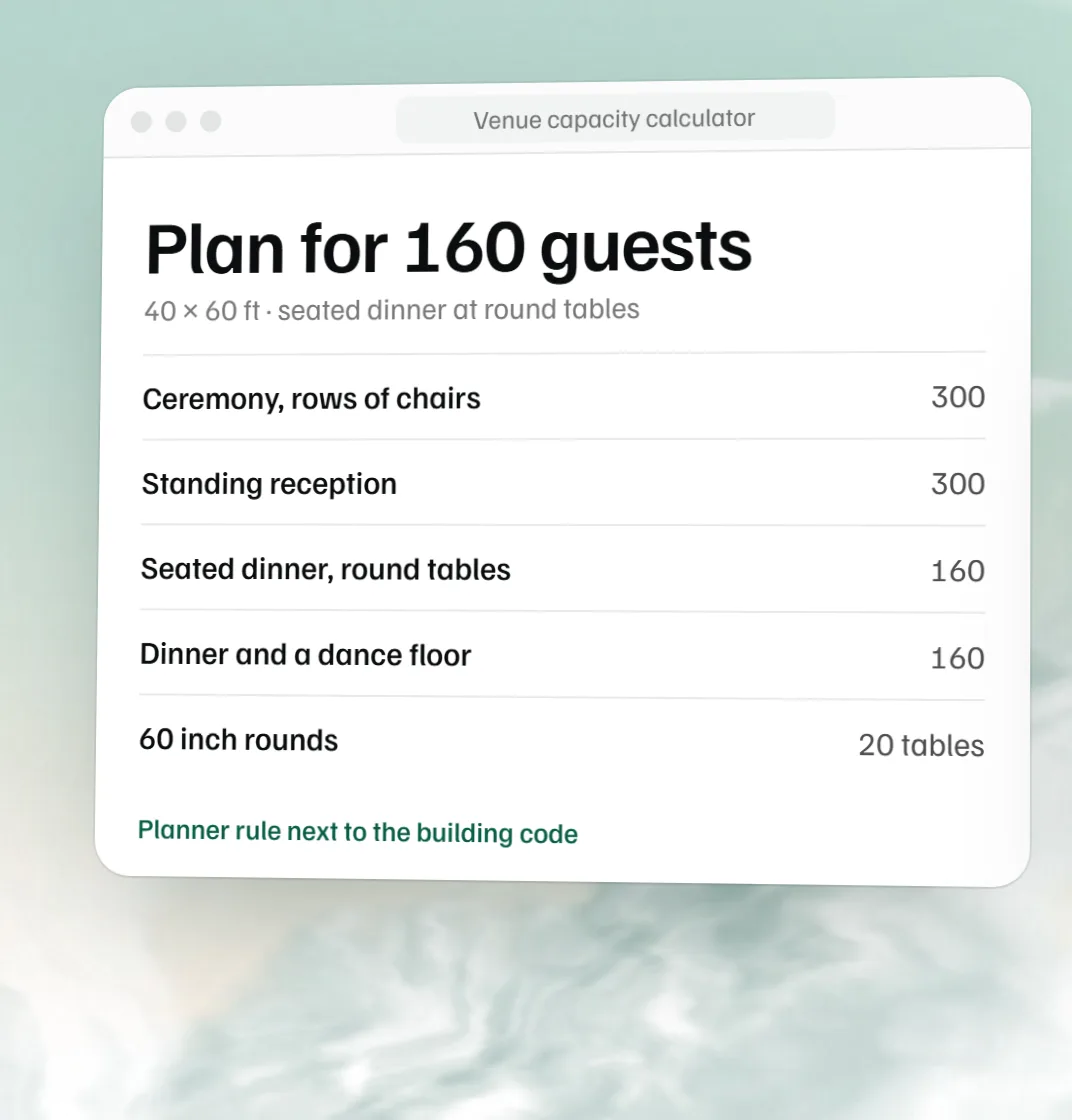 Free venue capacity calculator
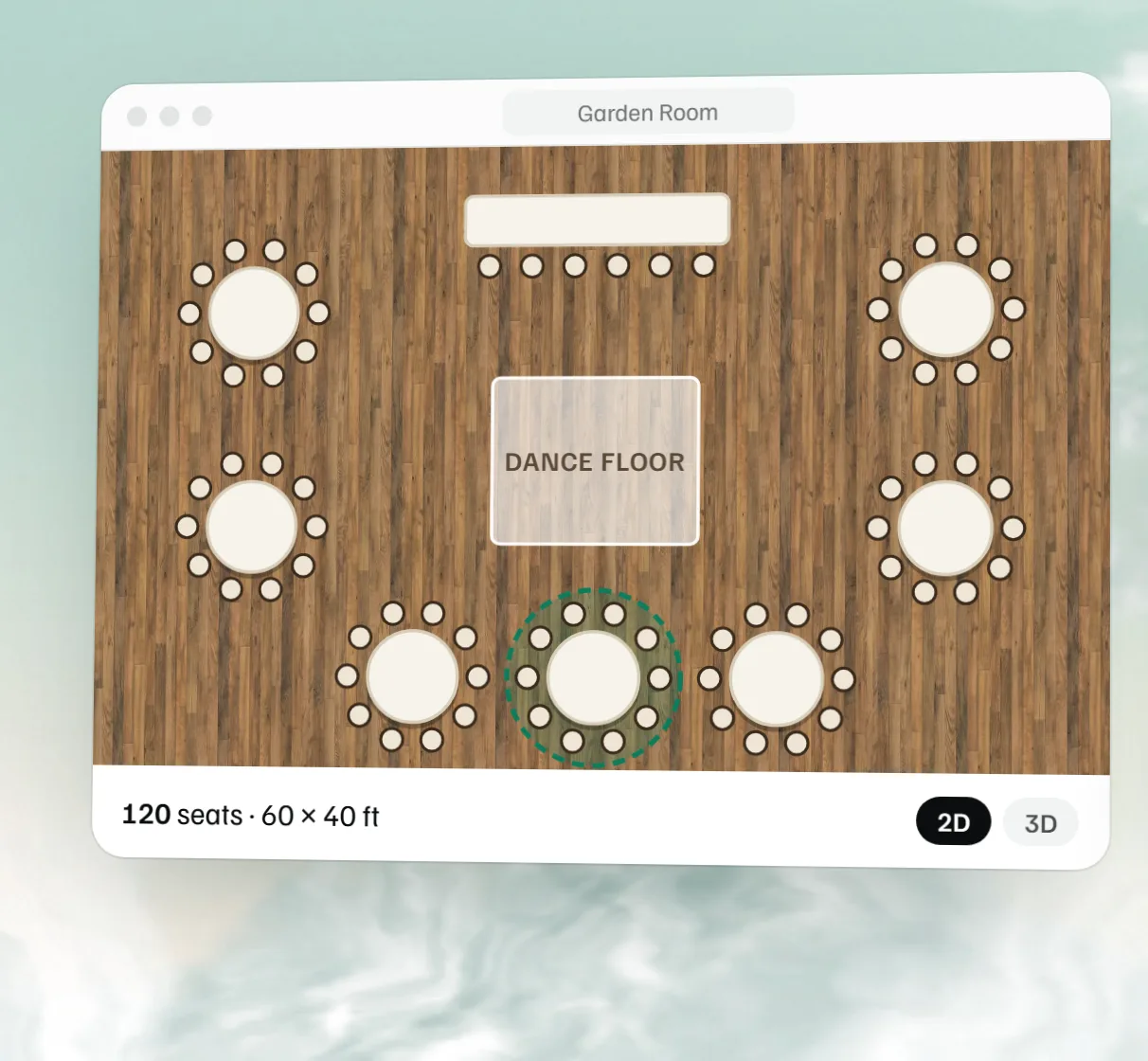 Free event floor plan maker
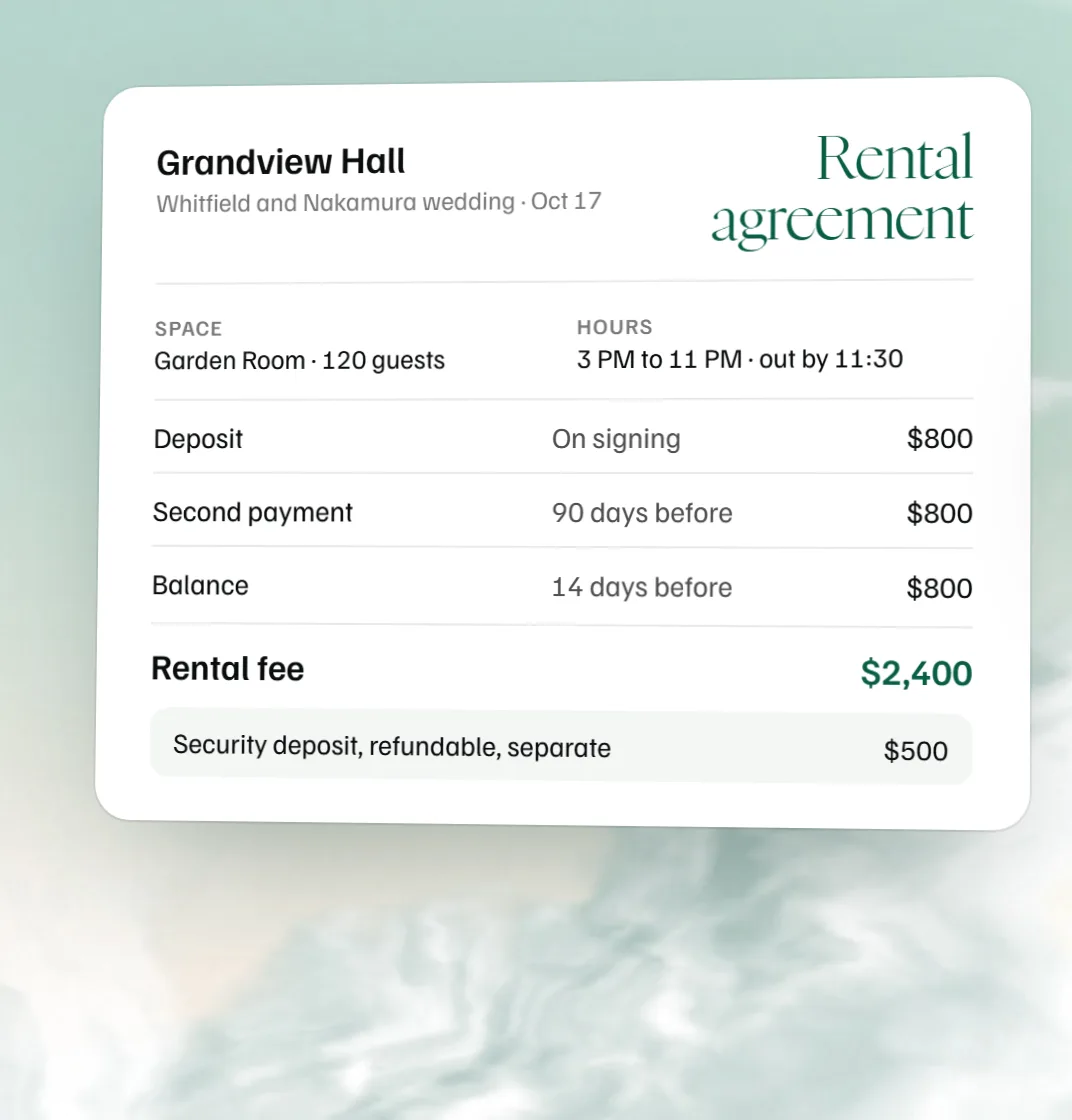 Free venue rental agreement template