
A rental agreement has one job: let two people who’ve never worked together agree, in writing, on what happens on a day that’ll be stressful for both. The clauses below are the ones that decide most disputes. They apply to a wedding venue contract and an event space rental agreement alike. If you cater too, the free catering contract template covers the food side.
This is a checklist, not legal advice. The sample wording is generic. Have an attorney in your state review the final agreement, especially the parts on liability, alcohol and refunds.
Download the agreement template (Word)
The Word file is a fill-in venue rental agreement: all twelve clauses with sample wording, the parts to change in [square brackets], and signature lines. It opens in Word, Google Docs and Pages. To write one from your own fee, hours and house rules instead, fill in the free venue rental agreement template online.
The twelve clauses
| Clause | What it covers | Sample wording |
|---|---|---|
| 1. Parties and space | Who is renting, who owns the venue, and exactly which rooms, grounds and parking are included. | This agreement is between Venue LLC (“Venue”) and Client name (“Client”) for use of the Garden Room and patio at venue address. |
| 2. Date, hours and access | The event date, the contracted hours, when vendors can load in and when everyone must be out. | The event is on date. Use runs 2:00 PM to 11:00 PM. Vendor access begins 12:30 PM. All guests and vendors leave by 11:30 PM. |
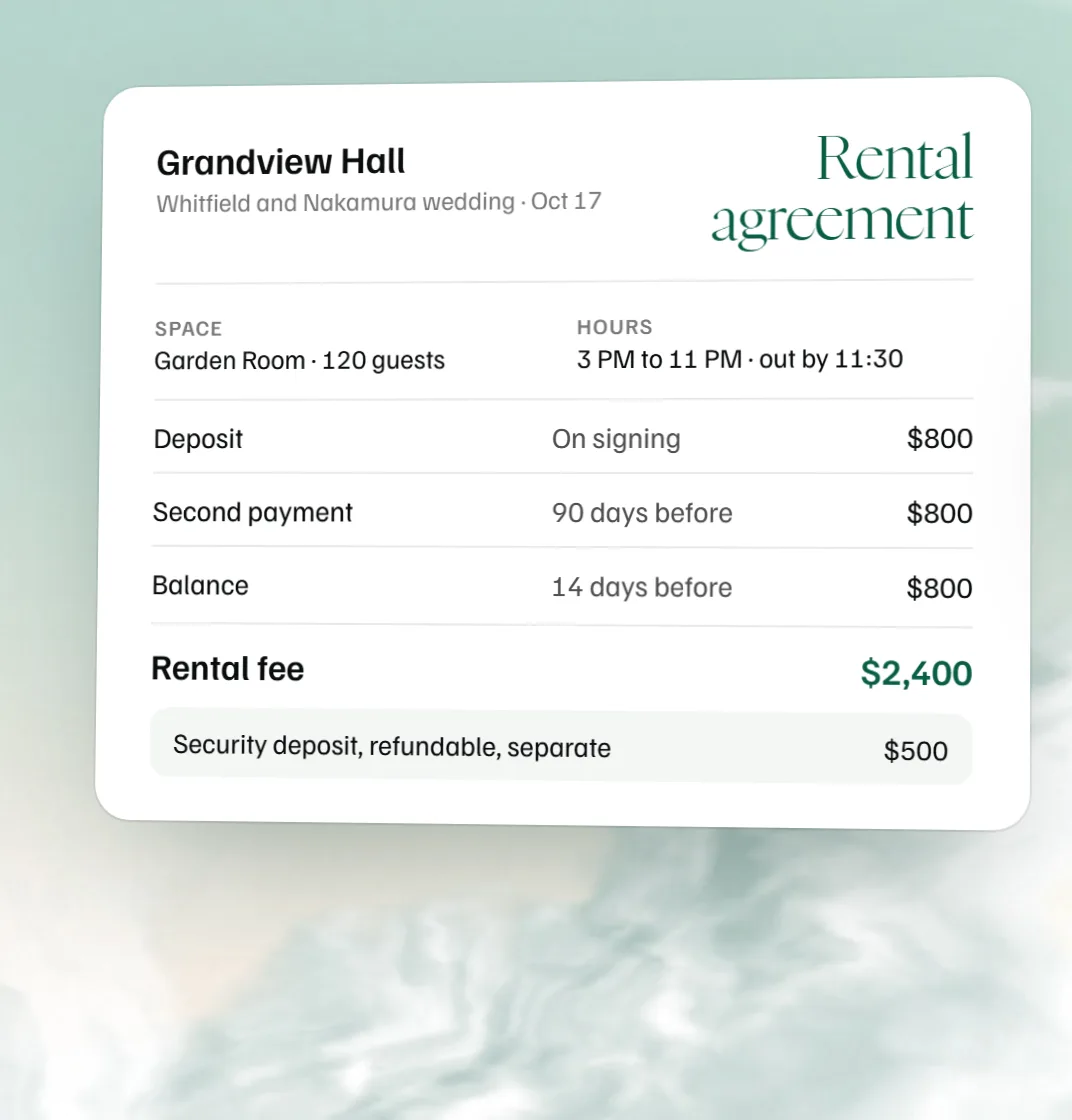
| 3. Fee and payment schedule | The total, what it covers, each due date and amount, and the accepted payment methods. | The rental fee is $6,500. $2,000 is due at signing, $2,500 at 90 days before the event, and the balance 14 days before. |
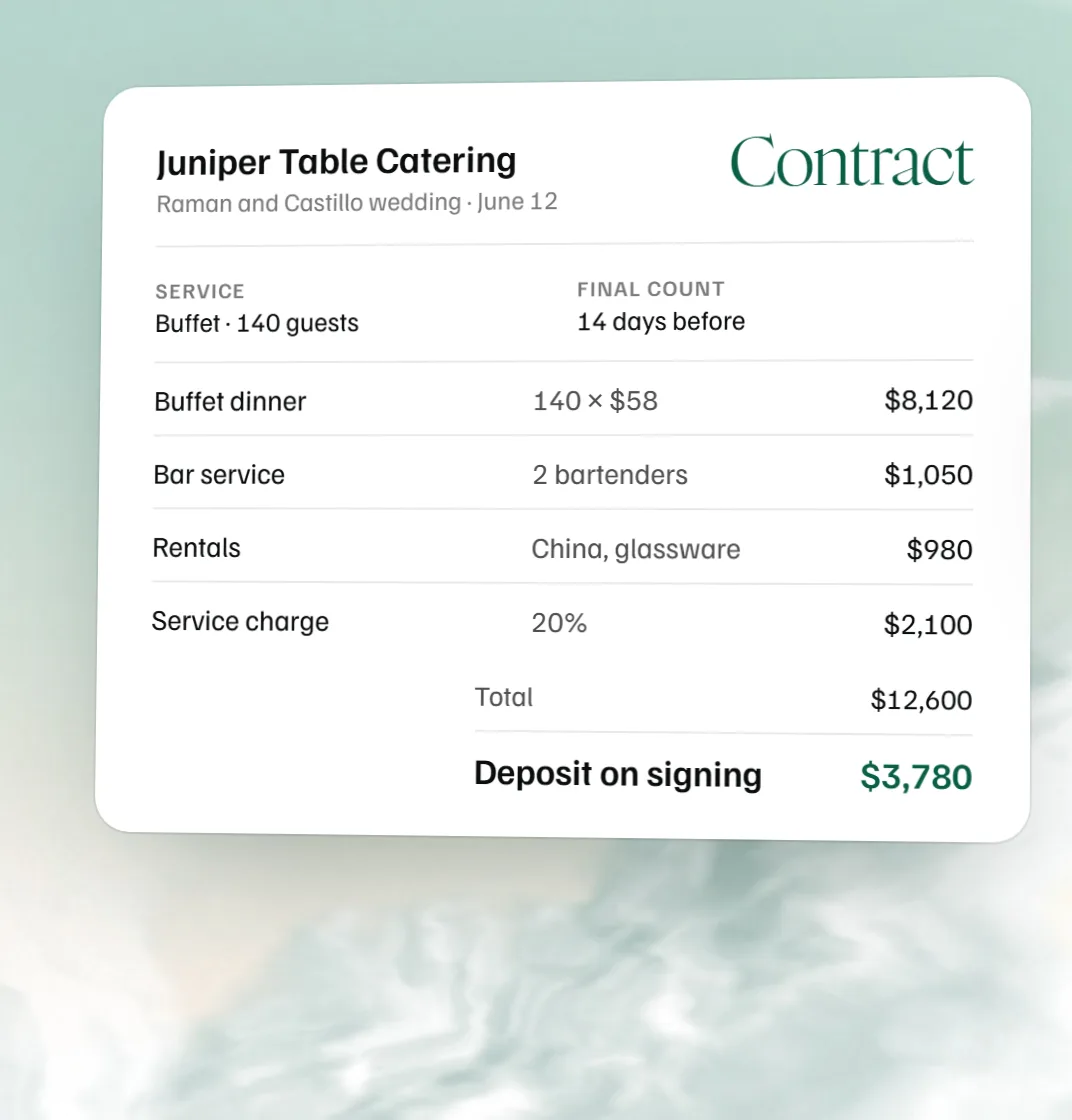
| 4. Guest count and guarantee | The expected count, the deadline for the final number, and what happens after it. | The final guest count is due 10 days before. The Client is billed for the guarantee or the actual count, whichever is higher. |
| 5. What’s included | Tables, chairs, linens, setup, staff, and which items cost extra. | The fee includes tables and chairs for up to 120 guests, house linens, and setup and teardown. Other rentals are billed separately. |
| 6. Cancellation and refunds | What the client forfeits at each stage, and what you do if you re-book the date. | The deposit is non-refundable. Payments made more than 90 days before the event are refunded in full if the date is re-booked. |
| 7. Damage and security deposit | A separate refundable deposit, what it covers, and when you return it. | A $500 security deposit is returned within 14 days after the event, less the cost of any damage or cleaning beyond normal use. |
| 8. Insurance and liability | Whether the client must buy event insurance, and who is responsible for guests and vendors. | The Client provides proof of event liability insurance 14 days before the event and is responsible for the conduct of their guests and vendors. |
| 9. Vendors and house rules | Outside vendor requirements and what is banned, such as open flames or confetti. | Outside caterers and bartenders must be licensed and insured, and send a certificate to the Venue 14 days before. Open flames, confetti and glitter are not allowed. |
| 10. Noise, alcohol and end time | Music cutoff, how alcohol is served, and the hard end time with an overtime rate. | Amplified music ends at 10:30 PM. Alcohol is served only by licensed staff. Overtime is $250 per hour. |
| 11. Force majeure | What happens if weather, an emergency or a public order stops the event. | If the Venue can’t host due to events beyond either party’s control, the parties will reschedule or the Venue will refund payments received. |
| 12. Changes and signatures | That changes must be in writing, and who is signing for each party. | Changes to this agreement must be in writing and signed or accepted electronically by both parties. |
Put the dates on one line
Most contract disputes are about timing: when the deposit was due, when the count was due, what the refund was on the day they canceled. Draw the timeline once and check the contract against it.
Four places agreements go soft
- “Non-refundable” with no explanation. Say what the deposit buys: the date you stopped selling to anyone else.
- Guarantee without a deadline. If the count can change forever, your food order and your staffing can’t be planned. See the guest count change checklist for who has to hear about it.
- Damage language that’s vague. Define normal use, and take photos of the room before and after.
- Rules that live only on a website page. If a rule matters, it goes in the agreement or in a document the agreement names.
Make signing easy for them and for you
A contract that’s hard to sign sits unsigned while the date you’re holding goes stale. Send it from a template you’ve already reviewed, let the client sign on a phone, and set the deposit invoice to follow the signature. After the proposal, this is the next place bookings stall. For a one-off, the free catering invoice template repeats the deposit and balance terms on the bill. Caterers need the same terms for food service; the free catering contract template covers the menu, final count and cancellation.
MyVenueHQ, wedding venue software for independent venues, does this from the event: you start from your own template, attach it to the booking, and the client signs from a link without making an account. The deposit invoice is on the same record. Contracts are on the Venue plan, $100 a month; see pricing. The wording stays yours, which is why the attorney review above is on you.
Sample wording and dates are for illustration. Laws on deposits, alcohol service and liability vary by state.
Sources
- LawDepot, Event Venue Contract: describes the venue rental as a license to use the space rather than a lease.
 Free venue rental agreement template
 Free catering contract template
 Free event floor plan maker