A tour is the moment a couple decides whether they can picture their day in your room. What happens before it and after it decides whether it becomes a booking. This guide gives six steps: stages with one rule each, preparation, the tour itself, the follow-up after it, a record of why deals are lost, and a weekly review. It is working practice, not research. The inquiry side is in our guide to reducing missed wedding venue inquiries, and the couple’s side is in the questions to ask a wedding venue.
1. Give each stage one rule for moving on
Every inquiry sits in one stage. A stage ends when a specific thing happens, and each stage has one next action and one owner.
| Stage | Moves on when | Next action |
|---|---|---|
| Inquiry | A tour is booked, or they decline. | Reply with date availability and tour times. |
| Tour booked | The tour happens, or they don’t come. | Send the confirmation and a reminder. |
| Toured | A proposal goes out. | Send the same-day message with the proposal. |
| Proposal sent | They ask for a hold, book, or decline. | Follow up on the schedule below. |
| Hold | The contract and deposit arrive, or the hold expires. | Chase on the expiry date, not before. |
| Booked or lost | Final stages. | Booked: start the paperwork. Lost: record the reason. |
2. Prepare for the tour
Before the visit, check three things. The date they asked about is still free, you know their guest count and rough budget, and the room is ready to show. Print or open the proposal for their date and guest count, so you can hand it over at the end. Confirm the time the day before. A tour that starts with a rushed search for the right room sends the wrong signal.
3. Run the tour in a fixed order
- Ask what matters most to them before you show anything, and write down what they say.
- Walk the route their guests would take on the day: arrival, ceremony, cocktail hour, dinner, dancing, departure.
- Show the room set for their guest count, with a floor plan if you have one.
- Say what is and isn’t included, and the dates that matter: the hold length and the deposit.
- End with a next step and a date: hold the date until Friday, or come back with the planner.
4. Follow up on a schedule, starting the same day
This schedule is an example to adapt. It starts at the end of the tour, not at the inquiry.
| When | What goes out |
|---|---|
| Same day | A thank-you that repeats the next step and attaches the proposal for their date. |
| Day 2 | An answer to a question they asked on the tour, or a floor plan for their guest count. |
| Day 7 | An offer of a hold that expires on a named date, with what happens at expiry. |
| Hold expiry | A note that the date goes back on sale tomorrow unless they confirm. |
Each message should add something: an open date, a floor plan, an answer. A message that only asks whether they have decided gives them nothing to act on. Stop the schedule when they reply, book or decline. If your follow-ups are automated and promote your venue, check them against the FTC’s rules, which our inquiry guide summarizes.
5. Count the stages and record why you lose
Counting each stage shows where couples drop out. The example below uses invented numbers. Use your own from the last three months.
| Stage | Count | Share of the stage before | Share of all inquiries |
|---|---|---|---|
| Inquiries | 40 | First stage | 100% |
| Tours booked | 14 | 35% | 35% |
| Tours held | 12 | 86% | 30% |
| Proposals sent | 8 | 67% | 20% |
| Bookings | 4 | 50% | 10% |
In this example the weakest step is inquiry to tour, where 35% move on. A venue like this one would work on the first reply and the tour offer before it worked on the tour itself. Your numbers will point somewhere else. When a couple declines, ask why and record the answer in one of a few fixed reasons, such as date, budget, room size, another venue or undecided. After a quarter you have your own answer.
6. Review the pipeline once a week
Spend ten minutes on three lists: tours in the last week with no follow-up sent, proposals with no reply after seven days, and holds that expire this week. Fix each at its source and move any record that is in the wrong stage.
Where MyVenueHQ fits
This section is about our own product, so weigh it as a vendor’s description. In MyVenueHQ, the daily briefing from HQ, the AI assistant, lists inquiries waiting for a reply and reminders that are due. HQ can prepare a follow-up reminder on an event, or a held date, and nothing happens until you press the button. Automations can send a follow-up email when a booking changes status. See wedding venue software for the inquiry-to-contract path, and our guide to using AI to answer inquiries for what to let it draft.
Next step
Pull the last ten tours from your records and check how many got a message the same day. Then write the same-day message once and keep it where you can send it from your phone.
The stage counts are invented to show the arithmetic. They are not a statistic about venues.
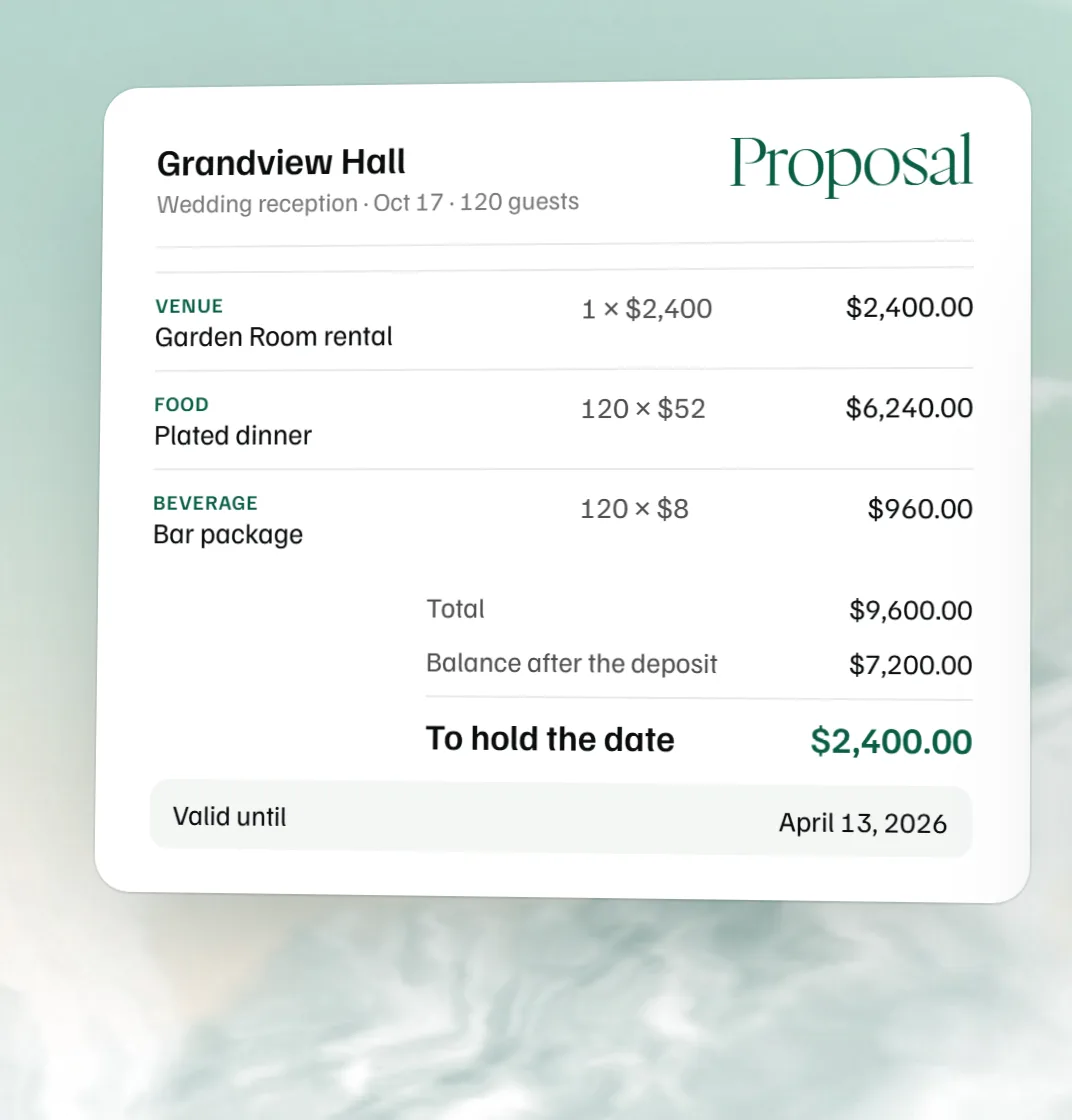 Free event proposal template
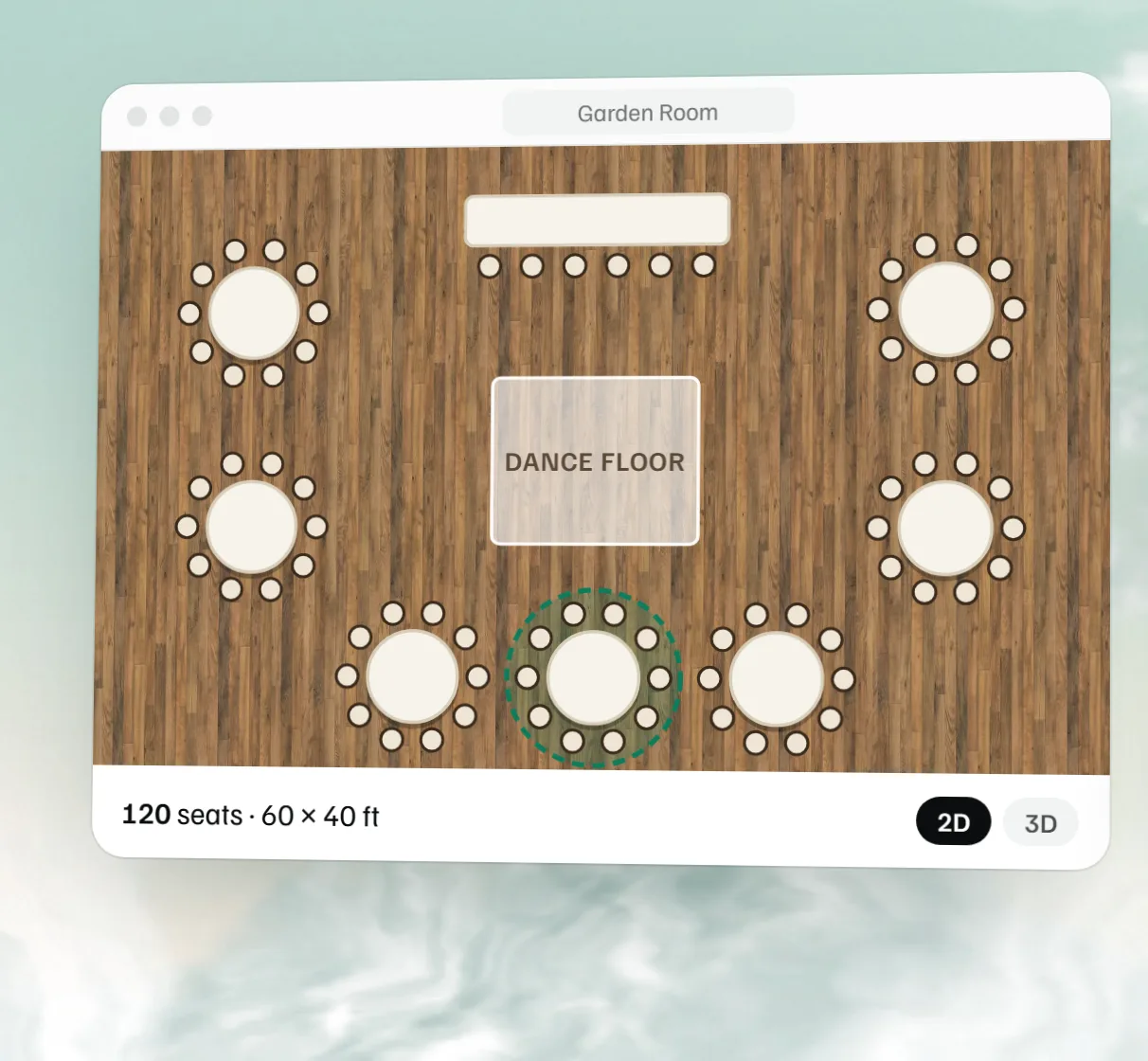 Free event floor plan maker
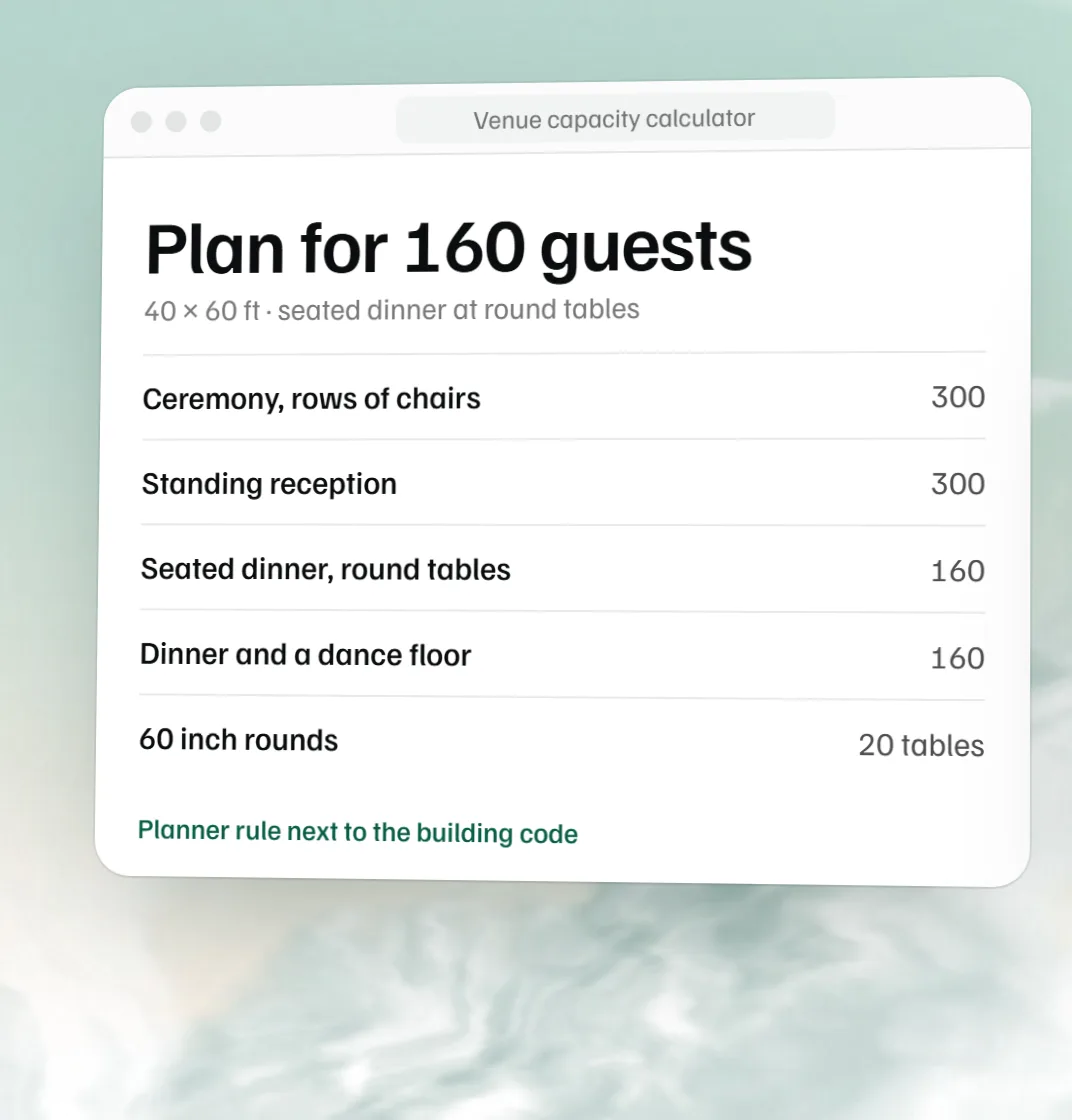 Free venue capacity calculator