
A bank, a partner or your own savings will ask the same thing: how many dates do you need to sell, at what price, to cover the property and still pay yourself? The model below does the math, and the sections after it are what a lender expects to see around it.
The revenue model
Put in your sellable dates, your fee for each and the share you expect to book, then what an event costs you to host and your fixed costs. The numbers already in it are a made-up 120-guest venue, the same one our pricing guide uses. They show the math; they aren't benchmarks.
- Events a year
- 41
- Revenue
- $284,000
- Event costs and card fees
- $102,820
- Fixed costs
- $96,000
- Profit before tax
- $85,180
Break-even at 22 events a year. Each event clears $4,419 after its own costs.
Read the example the way a lender would. It books 41 events and takes in $284,000. After $94,300 to run them, $8,520 in card fees and $96,000 of overhead, it keeps $85,180, before the owner is paid. It breaks even at 22 events. Saturdays bring in 83 percent of the revenue, so they move the result most: raise the peak Saturday fee 10 percent and profit goes to $102,494 with no extra bookings, but book 60 percent of peak Saturdays instead of 80 and it drops to $55,455. How wedding venues price covers the five pricing models you'll choose between.
What goes in a wedding venue business plan
Eight sections. Keep the whole thing short enough that someone reads to the financials.
Download the plan template (Word)
The template has these eight sections with prompts for what to write, and the example revenue model as a table to overwrite. It opens in Word, Google Docs and Pages.
- Summary. One page: the property, the market, the price, the number of events, and what you're asking for.
- The property and its capacity. Each space, how many it seats for dinner and holds for a ceremony, parking, restrooms, the kitchen, and what the occupancy sign allows. The free venue capacity calculator gives the seated and standing numbers from the floor area, and a to-scale layout from the free floor plan maker shows a lender the room set for a wedding.
- The market. The venues within 30 to 45 minutes that couples will compare you with, their published prices, their capacity, and what they don't offer. Ask a few local planners which dates sell out first.
- Pricing. Your fee by day and season, what's included, and the minimums. Show the Saturday price, because the model above turns on it.
- Sales. Where inquiries come from, how fast you answer them, the tour, and the deposit that holds a date. Write down how a booking moves from inquiry to signed contract.
- Operations. Staff for an event day, the vendor list and its rules, insurance, the cleanup, and the run of show your team follows.
- Permits and risk. Zoning or a conditional use permit, the occupancy rating, a liquor license or a licensed bar partner, noise limits, and what a cancellation costs you. Venue rental agreement clauses covers the contract side.
- Financials. Startup costs, the revenue model, a monthly cash flow for the first two years, and the break-even.
Startup costs to list
Prices depend too much on the property to give numbers, so list every line and get quotes. How to start a wedding venue covers the order to do it in.
| Cost | What it covers |
|---|---|
| Property | Purchase, down payment or lease deposit |
| Building work | Renovation, restrooms, accessibility, kitchen or catering prep room, HVAC |
| Site | Parking, paths, lighting, a ceremony site, drainage |
| Permits and fees | Zoning, building permits, fire inspection, licences |
| Furniture | Tables, chairs, linens, a dance floor, a bar. Banquet table sizes helps count them |
| Opening costs | Insurance, photography, website, listings, software, a cash reserve for the first slow season |
Event venue business plan: what changes
A venue that also takes corporate and social events fills the weekdays that weddings leave empty. In the model that's the Monday to Thursday row: lower fees, shorter events and quicker turnarounds, but dates a wedding venue otherwise sells to no one. Corporate clients often pay by the hour or against a food and drink minimum rather than a flat rental, and they book closer to the date. Plan the staff and the calendar for both, so a Thursday gala doesn't eat into Friday's wedding setup.
How much do wedding venues make?
There's no honest single number; it's the model above with your own inputs. Profit comes from three levers: the Saturday fee, the share of Saturdays you book, and how much of the fixed cost the property carries. A paid-off barn and a leased hall with the same bookings are different businesses. Run your numbers at a bad year's bookings too, and make sure the plan survives it.
Once you're open
The plan becomes the budget you check every month: inquiries, tours, bookings and revenue against what you modelled. MyVenueHQ keeps each booking in one dashboard, from inquiry to proposal, contract, deposit and BEO, and its revenue reports show the months you're ahead or behind. It's free for one venue and up to 10 events a month on the free plan, which covers a first season. The wedding venue software page shows the whole flow.
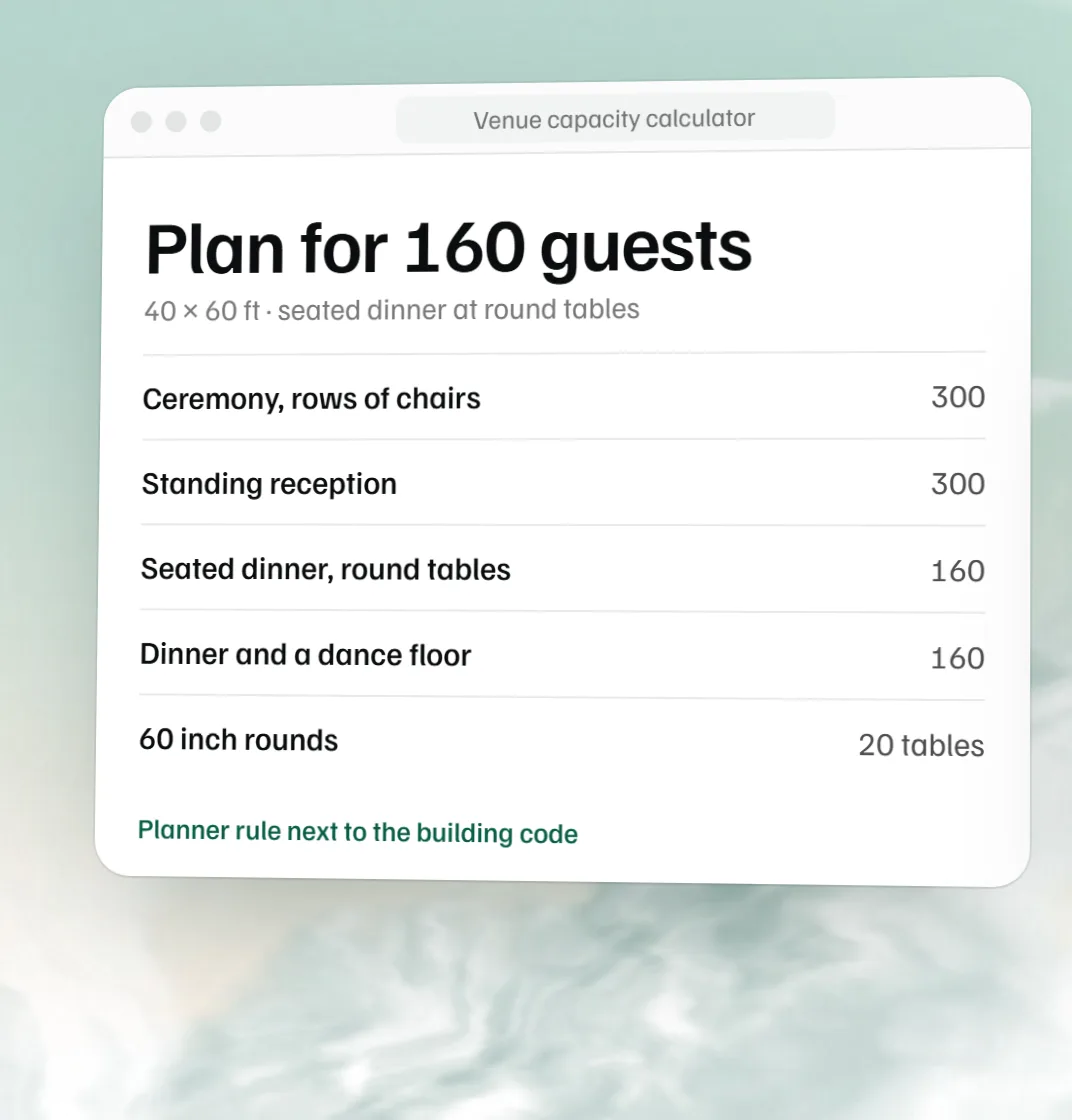 Free venue capacity calculator
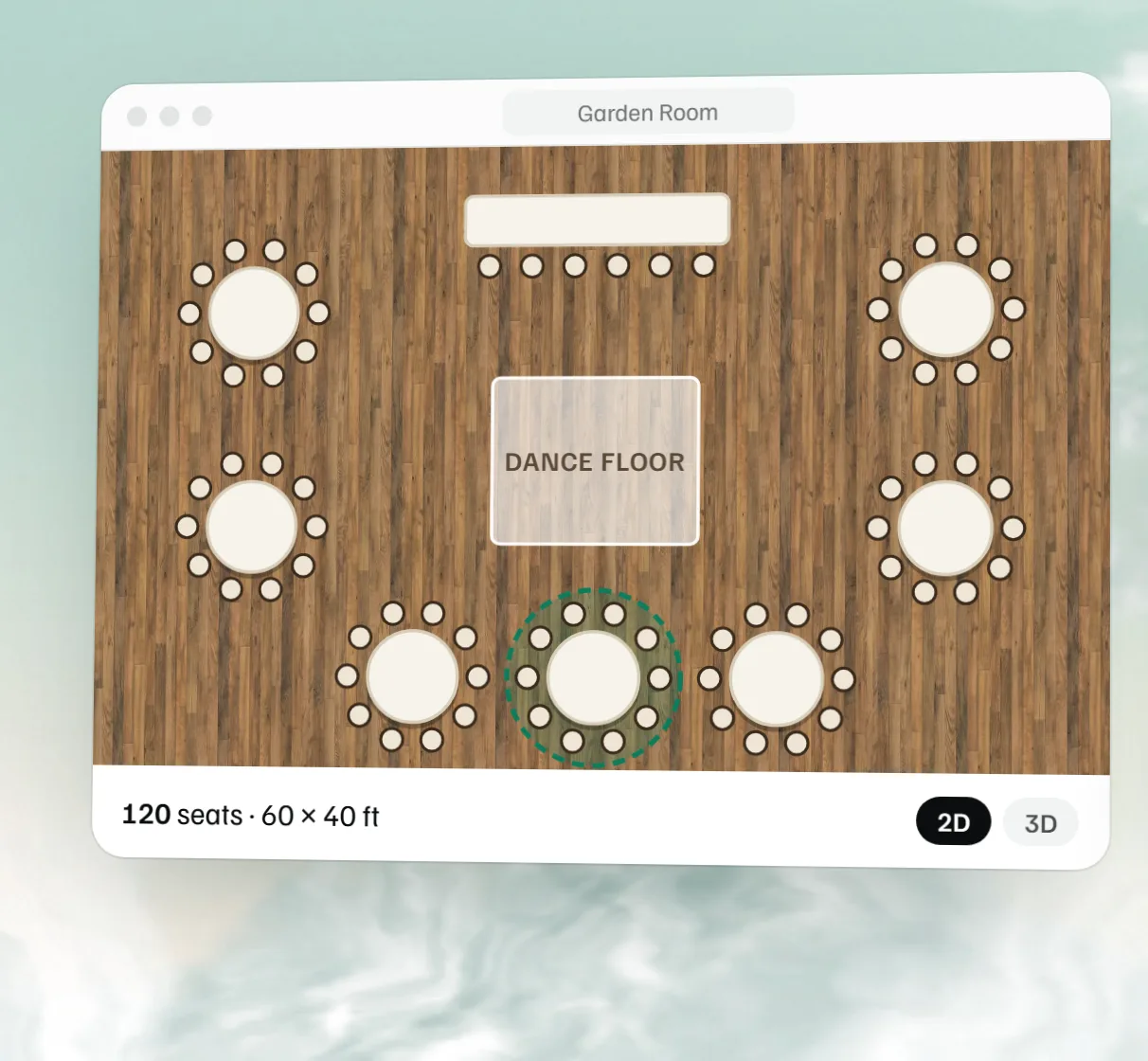 Free event floor plan maker
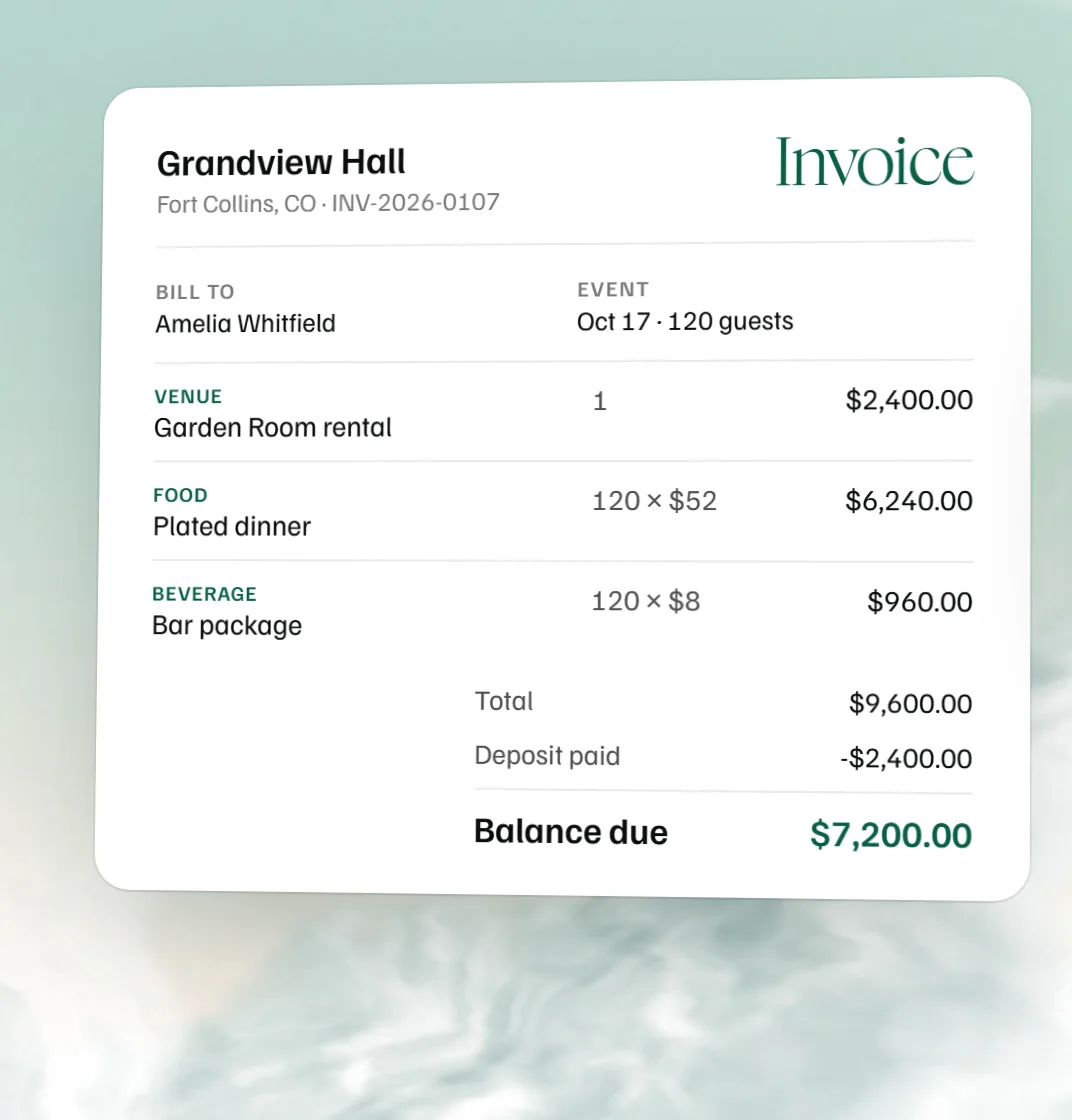 Free catering invoice template